
Kitchen Cabinets in Fremont CA: Custom vs Stock - What’s the Real Difference?
April 8, 2026
- By
- LB Construction
- General Contractor
Kitchen Cabinets in Fremont CA: Custom vs Stock – which one actually makes sense for your home and your budget? At LB Construction, we’ve been helping homeowners navigate this decision for years of experience, and we’ve seen how the right cabinet choice can define the entire kitchen remodel. A few months ago in Fremont, we met a homeowner who ordered stock cabinets online without confirming wall measurements. The result was uneven fillers, wasted storage, and added labor costs to modify framing. Choosing the wrong cabinet type can quietly drain thousands from your remodeling budget. If you’re already exploring a kitchen remodeling contractor, understanding cabinet differences is one of the most important early steps.
Standard Sizes, Faster Timelines, and Practical Tradeoffs
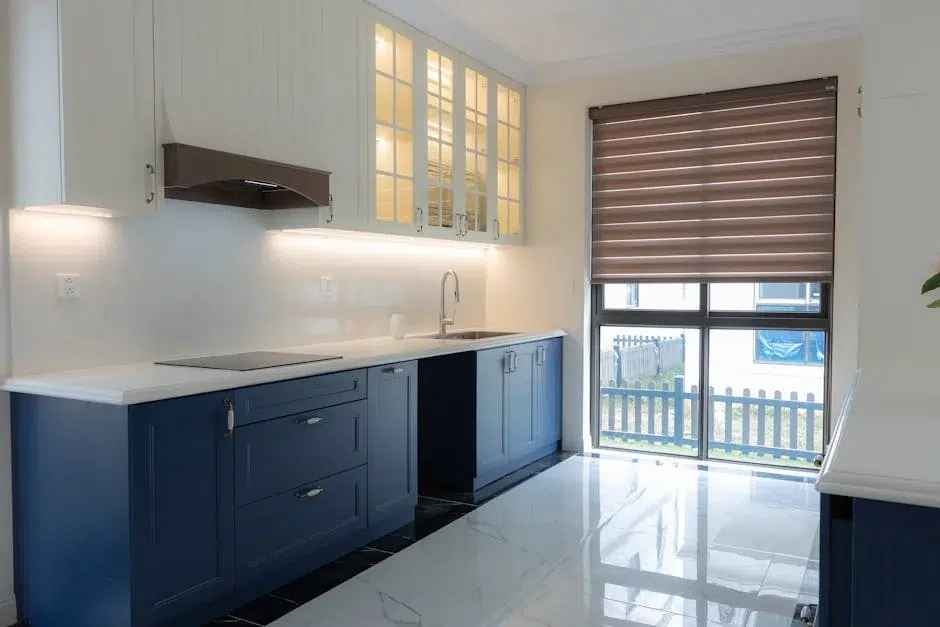
When selecting stock cabinets, the most important steps are accurate measurements, understanding size limitations, and verifying material quality. Stock cabinets are pre-manufactured in standard widths – typically 9 to 36 inches in 3-inch increments – and common heights like 30, 36, or 42 inches for uppers. They’re often constructed with particleboard or MDF boxes and thermofoil or laminate finishes, though higher-tier stock lines may offer plywood construction. For many Fremont homes with straightforward galley or L-shaped kitchens, stock cabinets provide a practical solution with shorter lead times – sometimes available within 1 – 3 weeks. Best practices we follow include:
- Confirming walls are plumb and level before ordering.
- Allowing space for fillers and scribe strips.
- Upgrading to soft-close hinges and full-extension slides where possible.
- Checking CARB Phase 2 compliance for formaldehyde emissions.
Cost, Durability, Timeline, and Best Use Cases
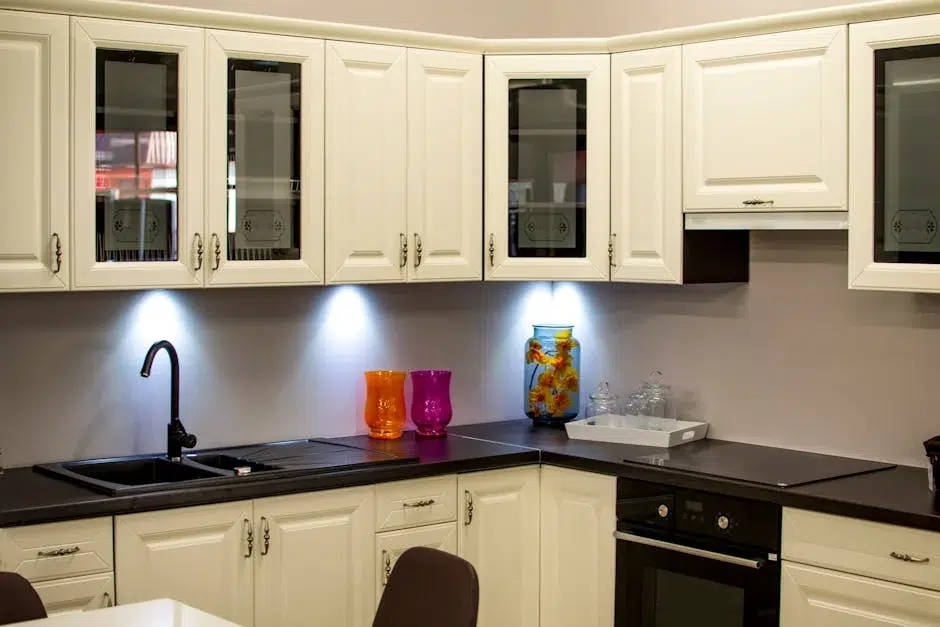
Choosing between custom and stock cabinets comes down to layout complexity, long-term plans, and budget flexibility. We once worked with a homeowner who started with stock cabinets to save money but later upgraded mid-project to custom after realizing the island dimensions wouldn’t align with their quartz slab layout. That change extended the timeline by weeks. Here’s a direct comparison:
Full remodel costs may fluctuate depending on site complexity, material costs, and total scope. For broader planning insights, review kitchen remodeling cost 2025 benchmarks. Which should you choose?
| Criteria | Custom Cabinets | Stock Cabinets |
|---|---|---|
| Fit & Layout | Built to exact dimensions | Standard sizes; fillers often required |
| Material Quality | ¾” plywood, hardwood frames | Particleboard/MDF common |
| Cost Range (Fremont) | $15,000 – $35,000+ | $6,000 – $15,000 |
| Lead Time | 6 – 10+ weeks | 1 – 3 weeks typical |
| Longevity | 20+ years with maintenance | 10 – 15 years typical |
| Design Flexibility | Unlimited finishes & sizes | Limited styles and colors |
- Choose custom if you plan to stay long-term and want maximum storage efficiency.
- Choose stock for faster timelines or rental properties.
- Consider refacing if boxes are solid but doors look dated.
Not Sure Which Cabinets Fit Your Goals?
Choosing between custom and stock cabinets affects storage, resale value, and your overall remodeling budget. Our team reviews layout constraints, ceiling heights, appliance specifications, and long-term plans before making a recommendation. If you’re weighing design flexibility against cost or timeline, we can provide a practical assessment based on your Fremont home’s layout and structural conditions. A short consultation often prevents expensive mid-project changes and helps align cabinet selection with your broader kitchen remodeling goals.
FAQs
Are custom cabinets worth it for older Fremont homes?
Older Fremont homes often have uneven walls, non-standard ceiling heights, or soffits that make standard cabinet sizes difficult to fit cleanly. Custom cabinets allow precise scribing to walls and ceilings, which reduces visible gaps and improves structural attachment. In homes with plaster walls or minor settling, we frequently adjust cabinet depths or heights by small increments to create symmetry. If you plan to stay long-term or are investing in high-end finishes like quartzite or integrated appliances, custom cabinetry typically delivers better visual alignment and storage efficiency. For short-term ownership or tight budgets, stock cabinets may still be practical if the layout is straightforward and walls are relatively square and level.
How long do stock cabinets typically last?
Stock cabinets generally last 10 – 15 years, depending on construction quality and moisture exposure. Cabinets with particleboard boxes are more vulnerable to swelling if exposed to leaks under sinks or near dishwashers. Upgrading to plywood box construction and soft-close hardware improves durability. Proper installation also plays a major role; cabinets must be leveled, securely anchored into wall studs, and shimmed correctly to prevent stress on joints. In Fremont kitchens with frequent cooking and steam, ventilation quality affects longevity. Using a properly ducted range hood and promptly addressing leaks significantly extends cabinet life. Maintenance, such as tightening hinges and cleaning with non-abrasive products, also helps preserve finishes.
What is the typical cost difference between custom and stock cabinets?
In Fremont, stock cabinets may start around $6,000 and range up to $15,000 depending on kitchen size and material quality. Custom cabinetry often starts around $15,000 and can exceed $35,000 for larger kitchens with premium hardwoods and specialty finishes. Installation costs may add several thousand dollars depending on layout complexity. Pricing fluctuates based on site complexity, material costs, and total scope. Features like pull-out organizers, appliance panels, and specialty finishes increase costs. Timelines also differ, with stock available in weeks and custom fabrication taking 6 – 10+ weeks. These figures are preliminary benchmarks for informational purposes only and do not constitute a binding quote. An on-site evaluation is required for a final proposal.
Can homeowners install stock cabinets themselves?
DIY installation is possible for experienced homeowners with proper tools such as laser levels, stud finders, clamps, and impact drivers. However, cabinet installation requires precise leveling and secure anchoring into framing members. Even minor misalignment can cause doors to swing unevenly or countertops to sit out of level. In Fremont homes with slightly uneven floors, shimming and scribing techniques are often necessary. Professional installation ensures proper spacing for appliances, accurate filler placement, and alignment for stone countertop templating. If you’re investing in high-end countertops, professional cabinet installation reduces the risk of costly rework caused by measurement errors.
What maintenance do kitchen cabinets require?
Routine maintenance includes tightening hinge screws, adjusting soft-close mechanisms, and cleaning surfaces with mild, non-abrasive cleaners. Avoid excessive water exposure, especially on MDF or particleboard components. Under-sink plumbing should be checked periodically to prevent leaks that can damage cabinet bases. In Fremont’s variable humidity, interior moisture control helps prevent wood expansion and contraction. Applying a silicone-based lubricant sparingly to drawer slides – if manufacturer guidelines allow – keeps them operating smoothly. Inspect for peeling thermofoil or separating joints, which may indicate moisture intrusion. Addressing minor issues early prevents structural deterioration and extends cabinet lifespan significantly.
Are there cabinet issues specific to Fremont homes?
Many Fremont homes are built on slab foundations, and slight settling over time can create minor floor unevenness. This affects cabinet leveling and door alignment. Coastal air moisture can also impact lower-grade cabinet materials, particularly particleboard. We often see issues around sink bases where small leaks go unnoticed. Additionally, open-concept kitchen remodels sometimes remove walls, requiring structural adjustments before cabinet installation. Ensuring walls are plumb and studs are properly located is essential before anchoring cabinets. Accounting for these local conditions during planning helps prevent alignment problems and premature wear.
What should I look for when hiring a cabinet contractor?
Verify that the contractor holds an active California contractor’s license and carries liability insurance and workers’ compensation coverage. Ask about experience with both custom and stock cabinet systems and request references from Fremont projects. Review installation methods – professionals should use laser leveling tools, secure cabinets into studs, and follow manufacturer spacing guidelines. Clear written proposals outlining material specifications, hardware brands, and timeline expectations help avoid disputes. Contractors should also understand local building code requirements related to electrical spacing and appliance clearances. Transparency in pricing and scope reduces the risk of mid-project cost increases.
When should I consider replacing cabinets instead of refacing?
If cabinet boxes are structurally sound, level, and free from water damage, refacing can be a cost-effective option. However, replacement becomes necessary when boxes are warped, particleboard has swollen from leaks, or layout changes require moving appliances or plumbing. Soft spots in base cabinets, loose joints, or sagging shelves often indicate deeper structural issues. If you’re expanding your kitchen or removing walls, new cabinetry typically makes more sense than modifying existing boxes. Scheduling a professional evaluation helps determine whether your current cabinets can support updated doors and hardware or if full replacement is the safer long-term investment.